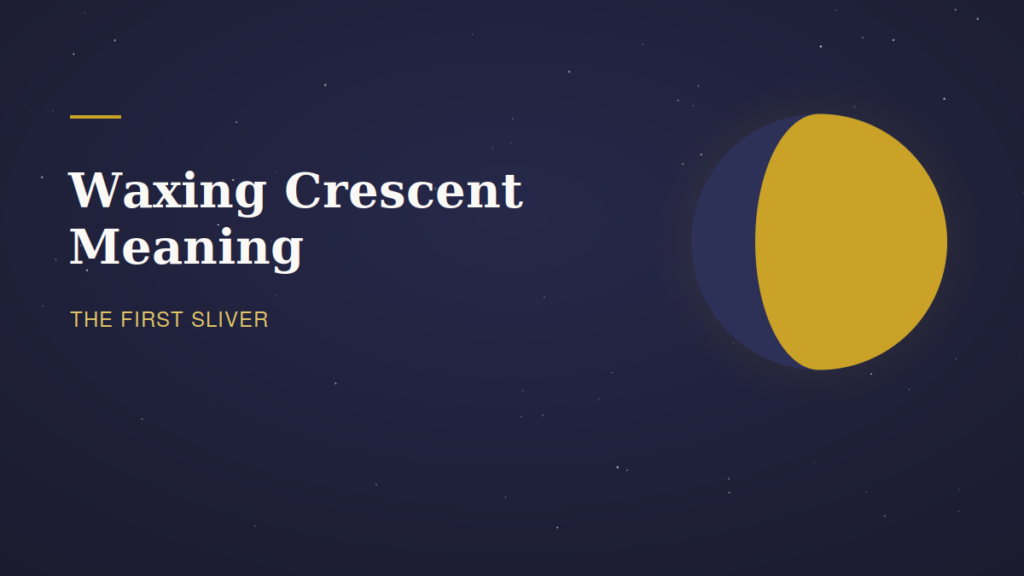
The waxing crescent meaning is the story of light returning: it is the thin sliver that appears just after the new moon, growing a little larger each night on the way to the first quarter. Less than half the disc is lit, and the lit portion is increasing — that is what makes it “waxing.”
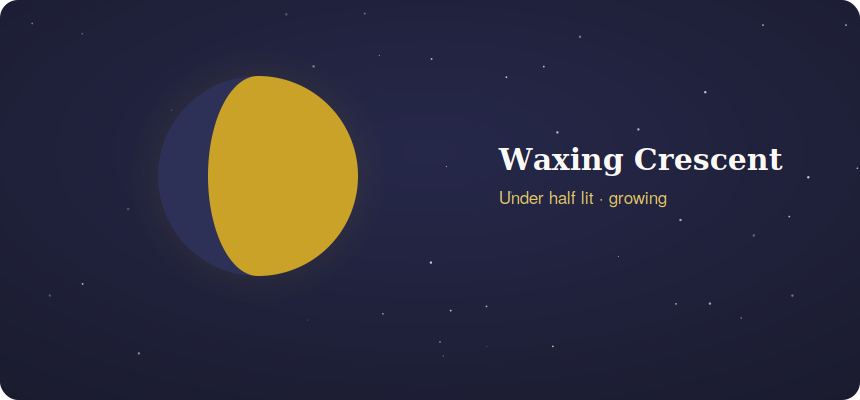
What a waxing crescent looks like
A slim curve of light on the right-hand side in the Northern Hemisphere, somewhere between roughly 1% and 49% illuminated. Britannica’s entry on the waxing crescent moon places it as the second of the eight phases, right after the new moon.
Where it sits in the cycle
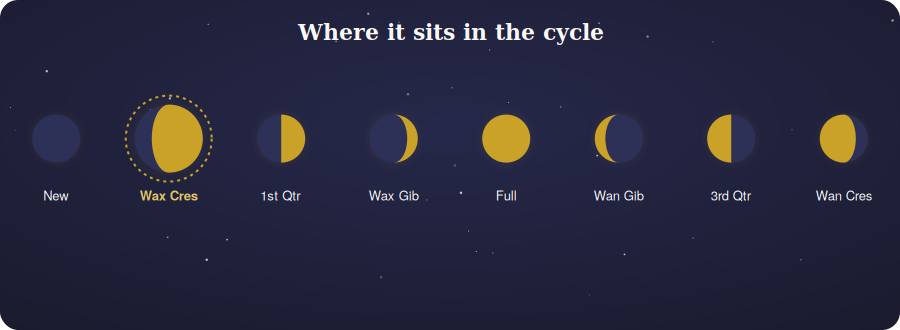
It follows the new moon and precedes the first quarter — the opening stretch of the cycle, when the Moon is emerging from darkness.
When you can see it (and a common mistake)
Look west, shortly after sunset. Here is a detail many people get backwards: a waxing crescent in the western evening sky is setting, not rising. As EarthSky points out, it quickly follows the Sun below the western horizon — it actually rose earlier in the day, soon after sunrise. Everything in the sky rises in the east and sets in the west as Earth spins.
Earthshine: the bonus you can spot
On a clear night with a thin waxing crescent, look at the dark part of the disc. You can often faintly see the whole round shape of the Moon, softly lit. That glow is sunlight reflected off Earth and back onto the lunar surface — sometimes called earthshine or “the old moon in the new moon’s arms.” It is one of the easiest genuinely beautiful things to spot with no equipment at all. NASA’s moon phases overview covers the lighting geometry behind it.
Waxing crescent meaning in folklore
In popular belief, the waxing crescent is associated with hope, first steps, early momentum, and intentions beginning to take shape — the fragile but real start of something. People born under it are often described as hopeful, adaptable, and good at beginnings.
An honest note: the personality and “spiritual” readings below are folklore and popular belief, not science. The astronomy is real; the meanings are for entertainment.
Why the waxing crescent is hard to spot
A very young crescent is genuinely difficult to catch, and it is worth knowing why. It sits close to the Sun in the sky, so it is only visible in a narrow window after sunset before it follows the Sun below the horizon. It is also thin, and competing with twilight. A clear western horizon helps enormously — buildings or hills will hide it. Spotting a crescent under about 24 hours old is a genuine achievement that some skywatchers deliberately chase.
The crescent in culture
The crescent is probably the most recognisable Moon shape in human culture, appearing on flags, in architecture, and across religious and artistic traditions worldwide. Part of that is practical: in calendars based on lunar months, the first sighting of the thin waxing crescent traditionally marks the start of a new month. So while the personality readings attached to it are modern folklore, the crescent’s significance as a marker of beginnings is genuinely ancient and rooted in timekeeping rather than symbolism.
Born under a waxing crescent?
The trend casts you as the builder of early momentum, with the waning gibbous as your cycle opposite. See how the pairings are read, or check waning gibbous meaning to read about your opposite.
Waxing crescent meaning: a quick recap
Pulling it together: the waxing crescent meaning describes the thin, growing sliver just after the new moon, under half lit, best seen low in the west shortly after sunset, and lasting about a week before the first quarter. In folklore it represents hope and first steps. The crescent’s long association with beginnings comes from lunar calendars, where its first sighting marked a new month.
Find your own phase
One date is all you need.
Find your birth moon phase — enter a birth date and see the phase in seconds. Free, no sign-up, and meant to be fun.
Or compare two birthdays and see how the phases line up.